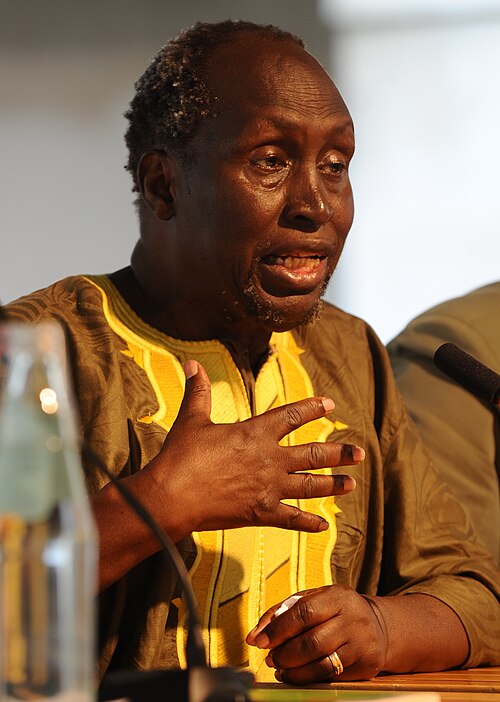
Ngũgĩ wa Thiong’o and the responsibility of language
Language carries memory, power and the right to describe our own experience.
Language carries memory, power and the right to describe our own experience.
Whose language tells the story? Language can help people take part in public life. It can also make them feel that their knowledge and experience are not welcome. When ideas are expressed only in the language of institutions, some members of the community are left doing the extra work of translation and interpretation.
The writing of Ngũgĩ wa Thiong’o invites us to examine that imbalance. His reflections on African languages, literature and colonial inheritance raised a lasting question: what happens when people are encouraged to think that their own language is unsuitable for serious ideas?
Language is more than vocabulary Words carry family memories, humour, ways of showing respect and the habits of a place. Translating a proverb may preserve its basic meaning while losing the particular social world around it. That is one reason language belongs in discussions about heritage and education, not only in literature classes.
Zimbabwe’s languages offer rich ways to explain our lives. Promoting them need not involve rejecting English or other international languages. The more useful goal is to widen participation so that multilingual ability is treated as a strength rather than a barrier.
A challenge for educators and communicators People who teach or communicate professionally make choices about language every day. We choose whether to explain a technical term, whether to provide another version of a message, and whether to speak as if one group of readers is the only group that matters.
Digital platforms make those choices more visible. A useful learning resource can combine English terminology with clear explanations in Shona or Ndebele. A community notice can become much more effective when the writer understands the language and circumstances of the audience.
Keeping the conversation alive Writers should not be asked to carry the entire responsibility for cultural memory. Families, libraries, schools, publishers and digital creators all have a part. Their work matters when children can encounter thoughtful stories in languages they hear at home and when adults can debate public issues without feeling excluded.
The enduring value of Ngũgĩ’s argument is not that it offers a single simple answer. It asks us to be alert to the relationship between language and power — and to make more deliberate choices about whose voices we help people hear.
About the author
Takesure Pambuka is a communications professional, educator and writer based in Gweru. His work is grounded in a simple belief: people deserve information they can understand and use.
Leave a Comment
Add a comment