The Intotal’s business model is unethical!
Zimbabwe's copyright laws flawed, but so is Intotal's practice unethical
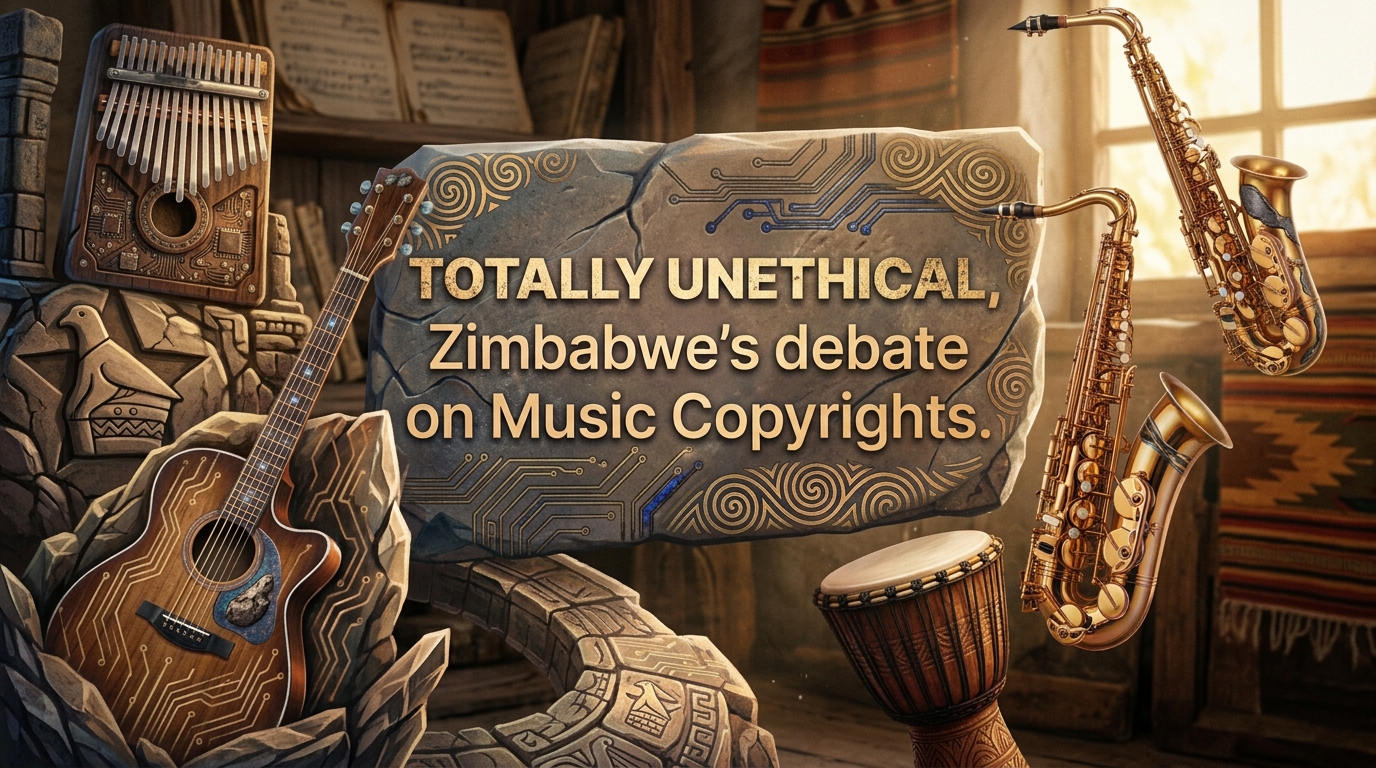
Zimbabwe’s debate about cover bands has been framed too narrowly. Much of the discussion asks whether Intotal Band pays the required performance licence. That question matters, but it cannot resolve the broader issue. Intotal has developed a recurring commercial enterprise whose principal assets are the songs, reputations and audiences created by other musicians. Its legal compliance, where properly established, does not by itself make that business model morally defensible.
Almost every musician begins by imitating, learning and performing the work of others. Cover songs are part of musical development and live entertainment. Zimbabwe has a long history of police, military, municipal, hotel and church bands performing existing music. The occasional cover within a broader performance raises few serious objections.
Intotal’s model has moved beyond that tradition. Legends Night began as a tribute concept through which audiences could hear the music of several established artists in one production. It has since developed into a series of commercial shows centred on the catalogues of different musicians. Intotal can effectively offer an organiser several famous artists in one band. This versatility has made it attractive to venues, corporations, private clients and audiences.
The commercial proposition is powerful: hire one band and receive the music of ten or twenty recognised musicians.
That proposition also reveals the ethical problem. Intotal’s competitive advantage depends on intellectual and cultural assets it did not create. Its musicians may rehearse extensively, perform skilfully and carry substantial production costs. Yet the songs, memories, emotional attachments and established audiences that make the shows commercially attractive were created by other musicians over many years.
Packaging does not create ownership Intotal deserves recognition for identifying a market, packaging its shows effectively and delivering productions that audiences want to attend. Marketing, rehearsal, transport, venue hire, sound engineering and financial risk are genuine contributions. They justify payment for the value Intotal adds to a production.
They do not transfer ownership of the underlying music. A supermarket may package and distribute agricultural products efficiently, but that efficiency does not erase the producer’s claim to the value chain. In the same way, a tribute band’s ability to package another musician’s catalogue cannot make the original creator economically peripheral. The argument that “music left sitting does not generate cash flow” treats music as an idle resource awaiting activation by a more capable entrepreneur. Music does not simply sit. It circulates through recordings, radio, family memory, public culture and the reputations of the people who created it. Intotal can generate revenue from these songs precisely because the original musicians already invested creative labour in building their meaning and audience. What Intotal has discovered is an effective way of monetising inherited cultural demand. That is a legitimate entrepreneurial achievement. It also creates an obligation to recognise where the commercial value originates and how it should be shared.
Scale changes the character of the activity A small band performing several covers in an eighty-seat restaurant is materially different from a sponsored premium production built around the repertoire of twenty or thirty recognised musicians. The difference concerns scale, frequency, branding, revenue and market effect. An occasional cover supplements a performer’s programme. A recurring tribute enterprise makes other musicians’ catalogues the foundation of its product. The original artists become the reason tickets are purchased, sponsors participate and venues are filled.
It is important that we have this reality in mind. Intotal is increasingly occupying performance spaces that surviving musicians, former band members and the families of deceased musicians may also hope to use. These families may lack Intotal’s production capacity, sponsorship relationships or marketing reach. Their commercial weakness does not dissolve their connection to the music. Some argue that the families should learn from Intotal and package their own productions more effectively. They may indeed have lessons to learn about presentation and audience development. Their limited business capability cannot justify their displacement from an economy built around their parents’ creative work.
The children and widows of earlier musicians often continue to live within the social and economic consequences of those careers. Some receive royalties. Others maintain bands, organise commemorations or preserve archives and instruments. Their expectation of continued benefit from the music is neither irrational nor simply jealousy. Copyright itself recognises that creative work can continue producing economic rights after its author has died. Legal ownership must be established carefully. Being a relative does not automatically make someone the copyright owner. Rights may belong to composers, lyricists, publishers, assignees or estates. Different rights may also exist in the composition, lyrics, sound recording and performance. Once the lawful rights holder is identified, that person’s authority over the work cannot be dismissed merely because a cover band has obtained a general licence.
A blanket licence is not unlimited permission The Copyright and Neighbouring Rights Act gives the copyright owner the exclusive authority to permit the public performance of a protected musical work. Collective management organisations such as ZIMURA administer some of these rights by licensing users, collecting fees and distributing royalties.
This system exists because it would be impractical for every venue or performer to negotiate separately with every composer. A collective licence can therefore provide lawful access to a large repertoire. Its authority remains dependent on mandate. A collecting society can license only the works and rights it is authorised to administer. Where a composer, estate, publisher or other lawful owner has reserved particular rights, withdrawn a work from collective administration in accordance with the applicable rules, or elected to license it directly, a general licence cannot simply extinguish that decision.
The long-standing unhappiness expressed by some musicians’ families therefore deserves serious attention. Their failure to issue cease-and-desist notices may result from limited knowledge of copyright, uncertainty about ownership, weak legal support or the cost of enforcement. Failure to litigate should not be interpreted as approval.
Intotal should not wait until each dissatisfied rights holder acquires a lawyer and approaches the courts. A responsible tribute enterprise would identify the catalogues it intends to use, establish who controls the relevant rights and seek direct engagement where objections have already been raised.
Royalties and tribute income are not the same thing The claim that families already receive royalties also requires scrutiny. Royalties compensate particular legally recognised uses of a work. They do not necessarily capture every source of value generated through a tribute production.
A premium tribute show may earn income from ticket sales, corporate sponsorship, venue partnerships, broadcasting, advertising and associated brand exposure. The show may also strengthen Intotal’s reputation and lead to further corporate or private bookings. A flat performance fee divided among many composers may bear little relationship to the total value generated through this model. This does not mean that composers or estates should automatically receive most of the production income. Intotal carries costs and commercial risk. Musicians, technicians, organisers, venues and sponsors also contribute to the event. A fair system should recognise these contributions while ensuring that the creators of the underlying musical assets receive a proportionate return. The present licensing model appears poorly equipped to make that distinction. Even worse, the popular thinking also is far from understanding what the problem is and what should be the fix!
The royalty model has failed to keep pace with the business model.
Legal compliance sets a minimum standard
Intotal’s defenders repeatedly return to one proposition: if the band paid the fee charged by the collective management organisation, it owes nobody anything further. That conclusion gives the existing licence more moral authority than it can carry. Law establishes enforceable minimum standards. A poorly designed tariff can still produce an unfair distribution of value. A collecting society can also collect money without distributing it transparently or proportionately. The present concerns about the governance, accountability and competence of Zimbabwe’s collective management organisations make blind reliance on the licensing system especially dangerous.
The legal question should establish whether the relevant works were within the collecting society’s mandate, whether the correct licence was issued, whether the programme was accurately reported and whether royalties reached the lawful rights holders. The moral inquiry must examine the complete commercial relationship. It asks whose work attracts the audience, whose identity gives the production meaning, who receives the resulting income and whether the model affects the ability of surviving musicians and families to earn from the same legacy.
Passing the first inquiry does not answer the second.
Hampers cannot replace an economic settlement. At some Legends Night productions, Intotal and its sponsors reportedly offered groceries or gifts to widows of deceased musicians. Such gestures may have been well intentioned and may have provided immediate assistance. They are an inadequate response to a structural economic question. A hamper positions the family as a beneficiary of generosity. A royalty or negotiated share recognises a right and contribution. The distinction concerns dignity, power and accountability. Families should not appear on the margins as recipients of charity while the music associated with their relatives occupies the centre of a commercially successful production.
Where Intotal repeatedly develops shows around a particular musician’s catalogue, consultation should occur before the event. The relevant estate, composer, publisher, surviving collaborators or family representatives should understand how the music will be used and what economic arrangement applies. Sometimes a phone call can indeed go a long way. For recurring premium productions, that phone call should lead to a written and transparent agreement.
What an ethical tribute model would require
Zimbabwe needs a differentiated system for commercial cover performances. Small restaurant bands, incidental covers, community tributes and major sponsored productions should not be governed through one blunt tariff.
Large tribute productions should be required to submit accurate set lists, disclose relevant ticket and sponsorship categories, verify the rights represented by the collecting society and make revenue-related contributions to the appropriate rights holders. Where an artist or estate has expressly objected and controls the necessary rights, that preference should be respected. An ethical model should also create space for surviving band members, descendants and custodians of musical legacies to participate where appropriate. Their involvement need not determine every artistic or business decision. It should recognise that the production is drawing from a living history connected to identifiable people.
ZIMURA, ZICCO, government, promoters, venues, musicians and artist estates all have responsibilities. Collective management organisations must improve mandate verification, tariff design, reporting and royalty distribution. Government must provide an enforceable regulatory framework. Promoters and sponsors must conduct due diligence before supporting large tribute productions. Rights holders must organise estates, document ownership and communicate their licensing preferences clearly.
Intotal also has agency. It can choose to build a tribute model that goes beyond minimum compliance and becomes an example of fair commercial stewardship. The music must continue, and value must return to its source Intotal has proved that Zimbabwe’s older music retains extraordinary commercial power. Audiences still want these songs. Sponsors can still see value in them. Venues can still be filled through the names and catalogues of musicians who created their work under very different economic conditions.
That success should benefit Intotal for its performance and production contribution. It should also generate meaningful value for the creators, lawful rights holders and musical communities from which the repertoire comes. Kana munhu achihaya Intotal achiziva kuti ahaya maartist gumi kana makumi maviri in one package, those musical legacies form part of the product being purchased. They cannot remain economically peripheral while the band, promoter, venue and sponsor derive value from them.
The central question is therefore larger than whether Intotal paid a flat licence. We must ask whether Zimbabwe is allowing a new tribute economy to grow by extracting value from old musical legacies without developing an equally serious system for consent, recognition and benefit sharing. Intotal’s business model may be efficient. Its legitimacy will depend on how it treats the people whose creativity makes that efficiency profitable.
Leave a Comment
Add a comment